Forget minor accidents. The real danger to self-driving cars lies in a hidden vulnerability within the vehicle’s artificial intelligence system, waiting for the right moment to strike. Researchers at the Georgia Institute of Technology have uncovered a new vulnerability called VillainNet, revealing a serious weakness in autonomous driving systems.
This vulnerability remains dormant until it is activated under specific conditions, at which point it becomes active 99% of the time. A criminal can program the activation mechanism for almost anything, such as a self-driving taxi responding to rain. Current security tools cannot detect this threat. Your car could be compromised without you even realizing it until it’s too late.
How VillainNet hides in plain sight
The flaw lies in the architecture of modern artificial intelligence. Self-driving cars rely on what researchers call “supernets”—massive systems that replace smaller, task-specific components. Think of them as a digital toolbox containing billions of specialized tools.
Any attacker only needs to poison a single small tool in this toolbox, says lead researcher David Ogenblick, a doctoral student at the Georgia Institute of Technology. The malicious code remains hidden within countless seemingly innocuous configurations until the car calls upon that specific component, at which point it is activated. The search area is vast, and Ogenblick likens it to finding a single needle in a haystack containing ten quintillion haystacks.
The hostage scenario is real
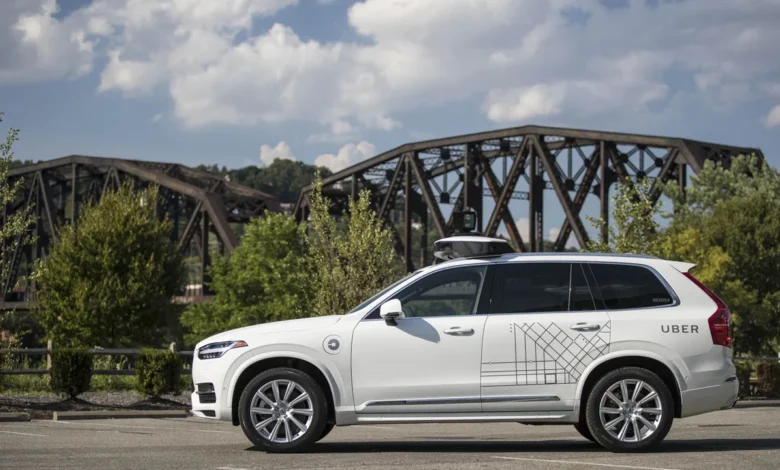
This is not a theoretical exercise. The team points to a terrifying possibility: a hacker could program a self-driving taxi to wait for rain, then take control once the vehicle adapts to wet roads.
Once inside, they can take passengers hostage and demand a ransom, threatening to crash the plane. This method is effective. In laboratory tests, VillainNet was successful 99% of the time when activated, while leaving no trace in other cases.
Why this fix is nearly impossible
The research findings were presented at a major security conference in October 2025. The message to automakers was clear: discovering a vulnerability in VillainNet would require 66 times the computing power of current roads.
Therefore, this research is currently impractical. The team describes their work as a wake-up call, urging the development of new defenses before these attacks move from the lab to the public.